


In the world of interior design, studios often get a bad rap for being cramped and chaotic. But what if they could be transformed into stylish sanctuaries that make you feel like a million bucks? With a sprinkle of creativity and a dash of inspiration, even the tiniest spaces can pack a punch.
Studio Interior Design Ideas
Chic and functional furniture enhances studio living. Multifunctional pieces save space and provide utility. A foldable table or convertible sofa accommodates various needs while maximizing space efficiency.
Light colors create an illusion of spaciousness. Soft whites and pastels reflect light, making small areas appear larger. Accent walls in darker shades add depth and interest without overwhelming the space.
Strategic placement of mirrors expands visual dimensions. Wall-mounted mirrors or mirrored furniture enhances light reflection and creates an airy atmosphere. Positioning mirrors across from windows maximizes natural light.
Textiles add warmth and texture, enriching the design. Layered rugs and cushions encourage comfort while adding visual appeal. Choosing fabrics with different patterns and weaves creates a dynamic environment.
Incorporating plants brings life and freshness into studios. Small potted plants or hanging greenery improve air quality and aesthetics. They also provide a calming effect, making the space feel more inviting.
Art pieces and personal touches express individuality. Selecting a few statement artworks or photographs personalizes the studio and creates focal points. Placement matters for effective visual storytelling; consider using shelves or gallery walls.
Effective lighting transforms the mood. Using a mix of overhead, task, and ambient lighting establishes a well-rounded atmosphere. Consider adjustable lighting fixtures for flexibility in creating different vibes throughout the day.
Organized storage solutions maintain a tidy appearance. Open shelving or stylish storage boxes display items beautifully while minimizing clutter. Utilizing vertical space for storage maximizes efficiency and keeps essentials accessible.
Color Schemes for Studio Apartments
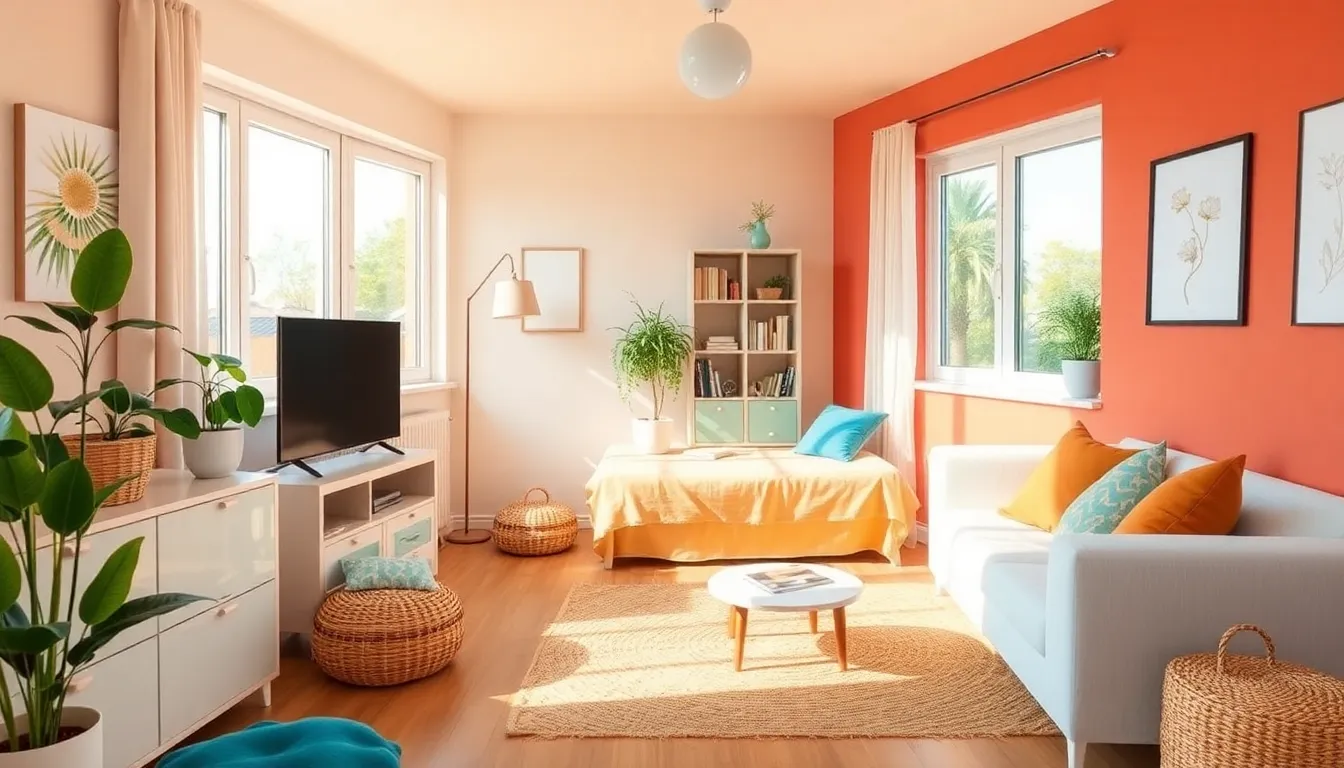
Color schemes significantly impact the atmosphere in a studio apartment. Choosing the right shades can create a welcoming environment that enhances small spaces.
Warm Tones
Warm tones generate a cozy atmosphere, making a studio feel inviting. Colors such as reds, oranges, and yellows evoke energy and warmth. They can enhance wood tones in furniture, creating a harmonious balance. Accents in terracotta or mustard can add character without overwhelming rooms. Combining warm colors with natural materials like jute rugs or wicker baskets enhances the cozy feel. It’s vital to use warm tones wisely, ensuring they don’t overpower the space. Pairing these colors with lighter hues can help maintain an open and airy vibe.
Cool Tones
Cool tones promote tranquility, making a studio feel spacious and serene. Shades of blue, green, and lavender can create a calming ambiance. These colors often evoke feelings of relaxation and help decrease stress. Using soft blues and greens can establish a beachy, refreshing atmosphere. It’s beneficial to incorporate cool-tone accents through pillows or artwork, keeping the look cohesive. In addition, pairing cool tones with neutral colors, such as white or gray, can maintain a clean, modern aesthetic. Cool tones work especially well in areas where natural light floods, enhancing their refreshing qualities.
Furniture Selection
Selecting the right furniture is crucial for maximizing the functionality and aesthetics of a studio space. Careful choices create a sophisticated environment that avoids clutter.
Multi-Functional Pieces
Multi-functional furniture serves multiple purposes, which is ideal for studios. A sofa bed can transform from a stylish seating area into a sleep space for guests. Coffee tables with storage compartments offer both surface space and hidden organization. Folding dining tables work well for dining and workspace needs, easily adapted to the occasion. Ottomans can serve as additional seating or storage, keeping the area tidy and efficient. Choosing pieces that blend seamlessly enhances overall design while ensuring practicality.
Space-Saving Solutions
Space-saving solutions transform small areas into comfortable living environments. Nesting tables can expand surface area when needed and tuck away when not in use. Wall-mounted shelves create vertical storage, maximizing floor space while displaying decor. Folding chairs provide extra seating that can be stowed away easily. Using a vertical garden not only adds greenery but also occupies minimal floor space. Custom cabinetry can be designed to utilize every nook, ensuring efficient storage and a clean look. Prioritizing these solutions contributes to a more open and inviting studio atmosphere.
Lighting Considerations
Effective lighting is crucial in studio interiors. It not only enhances aesthetics but also creates a welcoming atmosphere.
Natural Light Maximization
Maximizing natural light transforms small spaces. Large windows amplify the flow of light while sheer curtains diffuse brightness gently. Reflective surfaces, such as glass tables and shiny finishes, can enhance light distribution. Positioning mirrors strategically across from windows reflects the beauty outside, making the area feel brighter and more open. Opt for lighter paint colors on walls to further augment light levels. Choosing furniture with elevated legs fosters an airy visual effect, allowing light to travel freely beneath.
Creative Lighting Fixtures
Creative lighting fixtures add flair and functionality. Pendant lights provide focused illumination over specific areas, like dining or workspace zones. Wall sconces can free up valuable floor space while adding stylish detail. Layered lighting encourages versatility; mix ambient, task, and accent lighting for varied moods. Consider using adjustable LED lights for their energy efficiency and adaptability. Unique designs, such as geometric or sculptural fixtures, serve as eye-catching focal points, enhancing the overall aesthetic of the studio.
Decor and Accessories
Decor and accessories bring character to studio interiors. Thoughtful choices elevate the overall ambiance, blending style with personal expression.
Personal Touches
Personal touches amplify the uniqueness of a studio. Incorporating favorite photos, souvenirs, or heirlooms adds warmth and a sense of belonging. Showcase collections, such as books or travel memorabilia, to create visual interest. Use throw pillows and blankets in varied textures to enhance comfort. Layered textiles contribute to a cozy environment, inviting relaxation. Don’t overlook the significance of personal tastes in color and style; they help reflect the occupant’s identity. Even simple decorative items, like candles or vases, can resonate with personal stories and experiences.
Art and Wall Decor
Art and wall decor significantly impact the studio atmosphere. Strategically placing artwork can draw the eye and create focal points throughout the space. Choose pieces that resonate with personal interests or themes. Framed prints, canvases, or even textiles can add color and texture. Gallery walls create a dynamic visual experience that can transform a blank wall into a captivating display. Incorporating mirrors not only enhances the sense of space but also reflects light, promoting brightness. Selecting versatile frames allows for easy updates as tastes change, ensuring the decor remains fresh and engaging.
Transforming a studio into a stylish and inviting space is entirely achievable with the right design ideas. By focusing on multifunctional furniture and thoughtful color schemes, it’s possible to create an environment that feels both spacious and cozy. Incorporating personal touches through art and decor not only enhances the aesthetic but also reflects individual personality.
Effective lighting plays a crucial role in setting the mood and maximizing the visual appeal of the studio. With strategic use of textiles and greenery, the space can come alive, offering comfort and warmth. Embracing these design principles allows anyone to turn a small area into a luxurious sanctuary that feels expansive and personalized.


