


In a world where goods zip across borders faster than a caffeinated squirrel, global trade trends are shaping the way economies interact. From the latest tech gadgets to exotic fruits, understanding these trends is like having a backstage pass to the concert of international commerce.
As countries navigate the highs and lows of trade agreements, tariffs, and supply chain hiccups, it’s essential to stay informed. After all, who wouldn’t want to know what’s hot and what’s not in the global marketplace? Buckle up as we dive into the fascinating world of global trade trends, where every statistic tells a story and every shift could impact the price of that avocado toast. Get ready to explore how these trends can influence everything from your shopping habits to the future of economies worldwide.
Overview of Global Trade Trends
Global trade trends signify the shifting patterns in the exchange of goods and services across countries. These trends affect markets and influence economies on a global scale.
Definition of Global Trade
Global trade encompasses the import and export of goods and services between countries. It involves various stakeholders, including governments, businesses, and consumers, each playing a crucial role. Trade can include tangible products such as electronics and clothing, as well as intangible services like software development and financial consulting. Understanding this definition provides clarity on how interconnected today’s economies truly are.
Importance of Global Trade Trends
Monitoring global trade trends proves vital for several reasons. First, these trends influence economic stability and growth, impacting job markets and investment opportunities. Second, trade agreements and tariffs can reshape competitive landscapes, altering consumer choices and market dynamics. Lastly, awareness of supply chain developments informs businesses on sourcing and pricing strategies, fostering better decision-making. Keeping abreast of these trends allows individuals and organizations to navigate the complexities of international commerce effectively.
Current Global Trade Trends
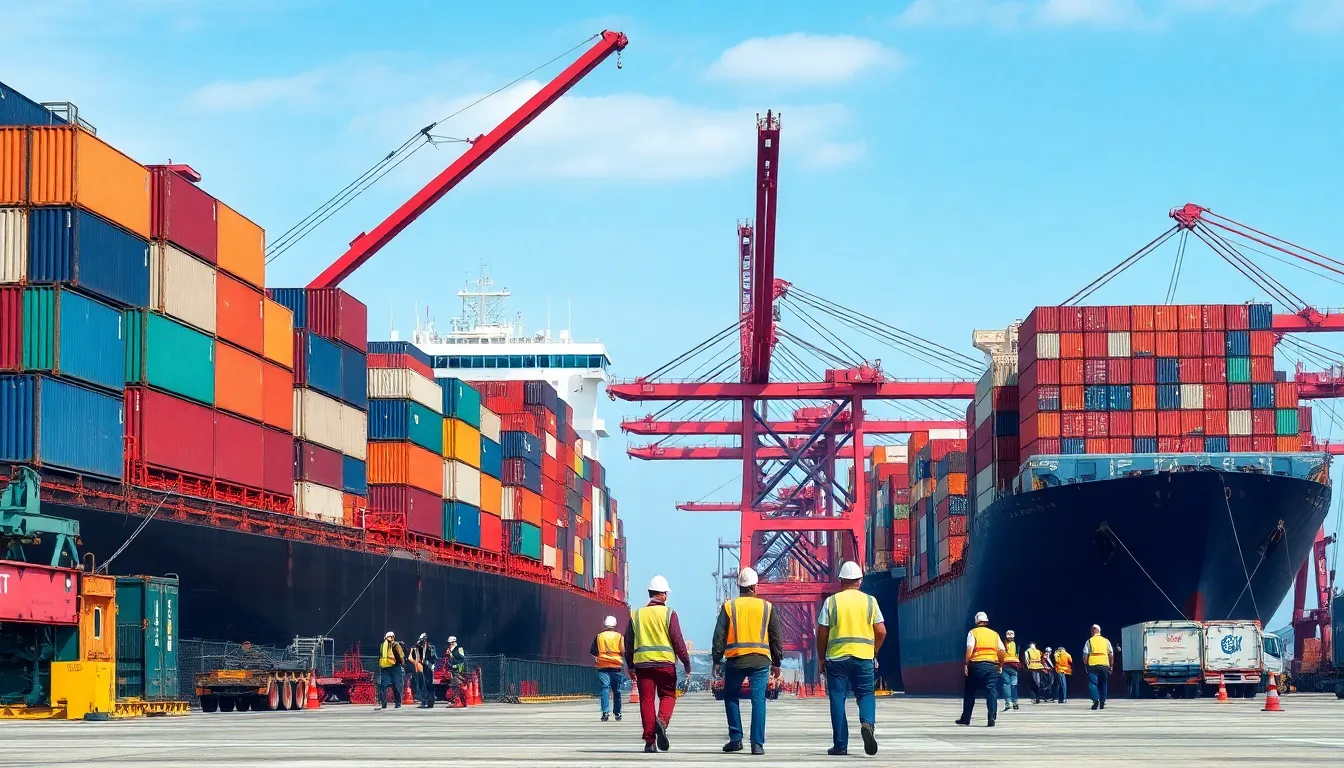
Global trade trends influence economic performances, consumer choices, and market dynamics. Staying informed about these trends is essential for understanding the international commercial landscape.
Key Statistics and Data
In 2022, global merchandise trade reached approximately $24 trillion. This marked a 10% increase compared to 2021. Notably, developed economies accounted for over 60% of total merchandise exports. Emerging markets, however, showed robust growth, capturing 36% of exports. The World Trade Organization projects continued growth in trade volume, predicting an increase of 3.4% for 2023. Trade in services represents around 25% of total global trade, highlighting evolving consumer preferences.
Major Trading Partners
The United States, China, and the European Union dominate global trade as significant players. As of 2022, the United States exported goods worth $1.7 trillion to major partners, including Mexico and Canada. China, on the other hand, maintained its status as the largest exporter, shipping goods valued at around $3.6 trillion. Japan and Germany also play crucial roles in the global trade network, both contributing substantial export figures. Collaborative trade agreements among these partners enhance market access and foster international economic relationships, driving overall trade growth.
Factors Influencing Global Trade Trends
Numerous factors significantly influence global trade trends. Understanding these factors helps companies adapt strategies to shifts in the international marketplace.
Economic Factors
Economic conditions play a crucial role in shaping trade dynamics. Currency fluctuations impact exchange rates, affecting prices and purchasing power. Changes in consumer demand greatly influence trade volumes. For instance, rising global GDP stimulates imports and exports, while recessions can contract trade activities. Inflation rates affect the cost of goods, impacting consumer behavior. Additionally, fluctuations in commodity prices alter trade patterns, as seen in recent trends toward sustainable resources. Lastly, interest rates affect borrowing costs, influencing investment decisions in trade infrastructure.
Political Factors
Political stability directly affects trade relationships. Trade agreements, or lack thereof, can open or restrict markets. Governments may impose tariffs that change import costs, leading to shifts in consumer choices. Recent geopolitical tensions have prompted shifts in supply chains, steering companies to explore new markets. Regulatory changes can also impact trade compliance, influencing how companies navigate international dealings. Diplomacy plays a critical role in maintaining smooth trade relations, as stronger alliances foster increased commerce. With evolving international politics, staying updated on emerging policies is key for businesses.
Technological Advancements
Technological advancements revolutionize global trade operations. Innovations in logistics streamline supply chains, reducing transit times and costs. E-commerce platforms enable businesses to reach consumers worldwide, expanding market access. Automation in manufacturing enhances production efficiency, impacting pricing strategies. Digital payment systems simplify transactions across borders, making it easier for small enterprises to engage in trade. Data analytics provides insights into consumer behavior, allowing for more informed decision-making. As technologies evolve, businesses must adapt to stay competitive in the global market.
Impacts of Global Trade Trends
Global trade trends significantly shape economies, communities, and the environment. By understanding these trends, stakeholders can better navigate their complexities.
Effects on Local Economies
Local economies experience varied effects due to global trade. Trade increases job opportunities, enabling businesses to expand and hire more workers. Economic growth in emerging markets leads to higher consumer spending, impacting local businesses positively. Regions that actively participate in global trade often see infrastructure improvements, enhancing overall commerce efficiency. In contrast, areas reliant on specific industries may face adversity if global demand drops. Reduced access to certain markets can lead to layoffs and lower wages, underscoring the importance of diversification. Therefore, monitoring trade trends proves essential for understanding regional economic health.
Environmental Considerations
Environmental impacts of global trade cannot be overlooked. Increased trade activities lead to higher carbon emissions from transportation, contributing to climate change. Moreover, deforestation and depletion of resources can occur due to the production demands associated with exporting goods. Sustainable practices are gaining traction as consumers increasingly prioritize eco-friendly products. Adopting greener supply chains mitigates negative environmental effects, encouraging businesses to innovate. Policymakers are now focusing on establishing regulations that promote sustainability in trade. Greater awareness around these issues fosters a more responsible approach to global commerce.
Future Outlook on Global Trade Trends
Anticipating future developments in global trade trends requires analyzing current data and projections. Growth in global merchandise trade is expected to continue, with forecasts indicating a 3.4% increase for 2023. Businesses must adapt to emerging consumer preferences and technological advancements. Predictions indicate an ongoing rise in online trade and digital transaction systems. Shifts in global economic power suggest that developed economies may maintain dominance, while emerging markets could capture a larger share of trade activities. Observing changes in tariffs, regulations, and geopolitical tensions will play a vital role in shaping trade dynamics.
Predictions and Forecasts
Predictions from the World Trade Organization reflect optimistic growth in merchandise trade, emphasizing a steady upward trend in volume. Emerging technologies will likely facilitate more efficient supply chains and enhance market access. Analysts foresee that e-commerce will continue transforming how goods are exchanged, influencing international trade patterns. Regulatory changes in major economies can significantly alter trading landscapes. Companies that invest in data analytics may gain insights into consumer behavior, refining their strategies. Overall, the interplay of these factors will shape forecasts and trade expectations for the upcoming years.
Emerging Markets
Emerging markets are poised for increased participation in global trade, driven by population growth and rising disposable incomes. Countries in Asia, Africa, and Latin America are projected to expand their market share significantly. Investments in infrastructure will enhance connectivity and logistics, further integrating these regions into global supply chains. Trade agreements among emerging economies have the potential to foster regional cooperation. Additionally, the digital economy’s growth will provide new avenues for small and medium-sized enterprises in these markets to access global consumers. Monitoring these developments is crucial for understanding the shifting landscape of international trade.
Staying abreast of global trade trends is vital for anyone engaged in the international marketplace. As trade dynamics evolve due to economic shifts technological advancements and changing consumer preferences understanding these factors can empower businesses and consumers alike. The interplay between developed and emerging markets will continue to shape the landscape fostering new opportunities and challenges.
With sustainability becoming a priority and regulatory changes on the horizon stakeholders must adapt their strategies to thrive in this complex environment. By remaining informed and agile companies can navigate the intricacies of global commerce while contributing positively to local economies and the planet.


